When the Kitchen Table Becomes a Landing Zone
Reset a kitchen table landing zone with a short, repeatable routine that clears stray items and makes room for meals, conversation, and daily use.
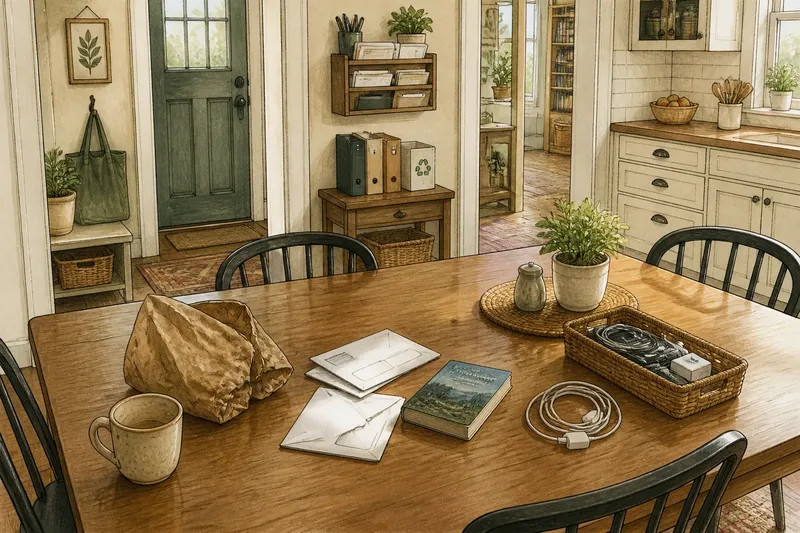
A kitchen table landing zone usually forms when the table sits between the front door, the kitchen, and the rest of the home. Mail, tote bags, chargers, school papers, and yesterday’s mug stop there because the surface is handy; a brief reset works best when it gives each kind of item a clear next destination.
Why does the table collect unrelated things?
A shared table is a convenient pause point. Someone comes in carrying groceries and sets down keys; someone else sorts a bill beside a snack. Each choice makes sense in the moment, but the table gradually becomes the place where unfinished errands wait.
Its broad, flat surface also hides the difference between “in use” and “not put away.” A folded grocery receipt can sit beside a library book and a charging cable, each waiting for a different next move. Together, they read as one vague pile, which makes it harder to start.
Notice the routes the items take. If the mail arrives near the kitchen, but the recycling bin is elsewhere, the table may be serving as a sorting station by default. If a bag is dropped there because the entryway has no landing spot, clearing the table without changing that route invites the same bag back.
The aim isn’t to make a shared room look untouched. It’s to give the table a legible job—perhaps meals, homework, or a place to talk—and to make the brief stopovers around it easy to clear.
What does a useful reset actually do?
A useful reset sorts items by their next action, not by how they look. Think of the tabletop as a small train station: each object has a destination, and the table shouldn’t become its final platform unless it belongs there.
Keep the routine short enough to repeat and consistent enough that other people can recognize it. The sequence below is designed for ordinary household clutter, not for heavy furniture, appliances, or anything that needs specialized handling.
- Choose the table’s resting state. Decide what may stay when the table is not actively being used. It could be bare, or it could hold a centerpiece and a salt cellar. Keep that standard modest and clear.
- Gather the obvious carry-outs. Collect mugs, dishes, food wrappers, and anything that belongs in another room. Carry items directly to their usual destination rather than creating a new stack nearby.
- Sort paper by its next action. Separate mail to open, papers to file or return, and recycling. Put each group where that action already happens; don’t make a second “to deal with” pile on the table.
- Return useful objects to their homes. Put pens, scissors, chargers, and reusable bags in their usual drawers, baskets, or hooks. If an object has no home, choose one before it becomes a permanent table resident.
- Clear the surface with a cloth. Once the loose items are gone, wipe the table using a cloth and a cleaner suitable for its finish. Follow the product label and the table manufacturer’s care instructions.
- Leave one cue for the next use. Set out placemats for dinner, a notepad for a planned conversation, or nothing at all. A visible cue can signal what the table is ready for.
Imagine a family finds a grocery bag, two unopened envelopes, a library book, and a phone cable on the table before dinner. They carry the bag to its storage hook, put the envelopes at the mail-sorting spot, return the book to its shelf, and place the cable in a charging basket; the table is then ready for plates without a fresh round of decisions.
How can you stop the reset from becoming another chore?
Attach the reset to an event that already happens, such as setting out dinner or switching off the kitchen light. A cue tied to an existing moment is easier to remember than a new alarm or a broad promise to “keep things tidy.”
Make the tools and destinations obvious. A small mail tray near the place where mail is opened, a hook for a frequently used bag, and a basket for shared charging cables can reduce wandering. These are not extra storage for every possible object; they are landing places for the items that repeatedly cross the table.
Agree on a shared resting state in plain language. “Keep the table open for meals” is easier to act on than “clean up after yourself,” which leaves each person to guess what counts. If the table also serves as a work surface, name the specific materials that may remain during that activity and decide where they go afterward.
For a household with different schedules, make the reset forgiving. One person can return dishes while another handles paper; the routine needn’t belong to whoever notices the mess first. A shared habit is more durable when its tasks are visible and small enough to divide.
What should happen to items that don’t have a home?
Separate “needs a home” from “needs a decision.” A stray pen may need a cup in a nearby drawer. A permission slip may need a signature. A brochure may simply need recycling. Treating every object as generic clutter keeps the actual next step hidden.
For an item that appears repeatedly, ask where it enters the room and where it should go next. A child’s school folder might belong in a backpack, not a decorative tray; a reusable shopping bag might belong on a hook near the door, not in a kitchen drawer across the room. Put the home along the item’s real route.
Be careful with papers that contain personal or household information. Keep them in the place you already use for private documents, and dispose of them according to your normal privacy practices. If you’re unsure what a document requires, check its sender’s instructions rather than leaving it in an open stack.
Not every object needs a special container. A labeled basket can be helpful when several people share a task, but a container that merely hides unsorted items can turn the landing zone into a covered pile. Give a basket a narrow purpose, such as “things to return upstairs,” and empty it as part of the reset.
What questions come up when the table keeps filling?
Should the kitchen table stay completely clear?
Only if that suits the way your household uses it. A simple, agreed resting state—bare or holding a few useful objects—matters more than an empty surface for its own sake.
Where should incoming mail go?
Place it near the spot where someone will open and sort it, rather than at the center of the table. Keep the destination distinct from papers that need filing, signing, or recycling.
What if the table is also a work or homework space?
Define a small set of materials that may stay while the work is active, then choose a nearby container or shelf for everything else. When the activity ends, return the work items together so the next use doesn’t begin with sorting.
How often should the reset happen?
Use the moment that fits your household, such as before a meal or at the close of the evening. If the surface is already difficult to use between resets, make the item homes easier to reach or give frequent stopovers a better place nearby.
How can you tell whether the arrangement fits?
Watch what happens after the reset, not whether the table looks polished at one particular moment. If the same objects return, their route or destination may still be inconvenient. Adjust one thing at a time: move the mail tray closer, add a hook where a bag actually lands, or remove a basket nobody uses.
Keep the arrangement suited to the table’s main purpose. A dining table may need open space at mealtime; a table used for family projects may need a nearby shelf for shared supplies. The point is not to prevent temporary use, but to make clearing the surface feel like putting things away rather than solving a mystery.
A kitchen table landing zone becomes easier to manage when the reset ends with a visible purpose for the next use. Leave the placemats ready, set down the notebook for a planned task, or keep the surface open; that small cue tells everyone what belongs there now—and what needs to move along.